There are a large number of connector manufacturers in mainland China and Taiwan, providing various types of connectors. Among them, multimedia and A / V connectors are the main factors driving the growth of their connector output. New connector products recently introduced by these vendors focus on providing integrated functions and multi-device interfaces. As manufacturers continue to broaden the scope of their connector applications, supply is expected to remain on the rise. Driven by mobile phones and digital electronics, sales of these products have grown dramatically, and this trend is expected to continue in the coming years.
The connector industry in mainland China has always had an advantage in the low-end market. Connector manufacturers in this region are marching into the mid-range field, paying more attention to product quality. At the same time, they are still fighting price wars with their Asian peers, and are often the winners. At present, a full range of connector products can be purchased from mainland China. The mainstream models are mainly used in computer, telecommunications and A / V products, as well as fiber optic and PCB connectors. Connector vendors often produce modular jacks, telephone plugs, and terminal modules.
China's connector production meets 33% of global demand. According to the China Electronic Component Industry Association Connector Branch (CECA) estimates, the total output of mainland China connectors was 8.4 billion in 2006, an increase of 5% over 2005. Although the cost of raw materials such as copper continues to rise, the connector industry in China is expected to maintain a 5% increase in 2007.
Mainland China's local connector industry consists of about 600 large-scale manufacturers and about 400 small factories. Jiangsu, Shanghai and Sichuan are the main connector production bases. Manufacturers with large production capacity include Glorious, Senda and Yuqiu.
In Taiwan, the connector field is considered one of the major industries. The total output value of all types of connectors in the region in 2006 was $ 3.7 billion, and it is expected to reach $ 4.1 billion in 2007. According to the Industrial Economics and Trends Research Center (IEK) of the Industrial Technology Research Institute of Taiwan, the total output value in 2008 will further rise to $ 4.5 billion.
At present, manufacturers in Taiwan continue to focus on high-end products such as HDMI, RF, fiber optics, memory cards and USB connectors. However, some Taiwanese manufacturers still produce low-to-mid-end connectors at their mainland factories, most of which are located in Dongguan, Shenzhen, and Suzhou. Among the more active players are Aliner Industries, COMOSS, and Wieson.
Popular multifunctional, integrated products
The electronics market requires the latest consumer electronics products such as mobile phones and handheld digital products to have the ability to interface with different devices. Given that these end products are currently the largest application areas, manufacturers must develop more products with such capabilities. In particular, lead-free and RoHS-compliant products have been widely available since 2006.
Yuqiu's product line includes USB connectors, power connectors and terminal connectors, which are mainly targeted at consumer electronics. Its research and development focuses on mobile phone and handheld digital product connectors. The company recently developed a connector that houses a mini USB flash drive and headphones. This new connector has more pins than the standard five, thereby enhancing the audio and data transmission speed of the connector. Miniature connectors for MP3 players are also the focus of the company's development. In addition, it also produces headphone and microphone sockets, AC / DC and RCA sockets, switches, etc. As Sony's green partner, Yuqiu's products meet environmental requirements.
Senda Electronics also launched a series of 6-pin mini USB connectors in 2006 for mobile phone applications. The company's product development focuses on reducing the overall size and pin pitch of the connector and increasing the insertion force to 35N and higher. Battery connectors and I / O connectors are also Senda's key development areas.
Senda's multimedia connectors are mainly used in mobile phones and MP3 players. Other target applications include computers, TVs and DVD players. The company's broad product line of connectors includes SATA, eSATA, D-Sub, HDMI, USB, mini USB, FFC / FPC, mini DIN, CF card, SD card, mini SD and TransFlash. Senda also produces headsets and telephone plugs and various types of cables.
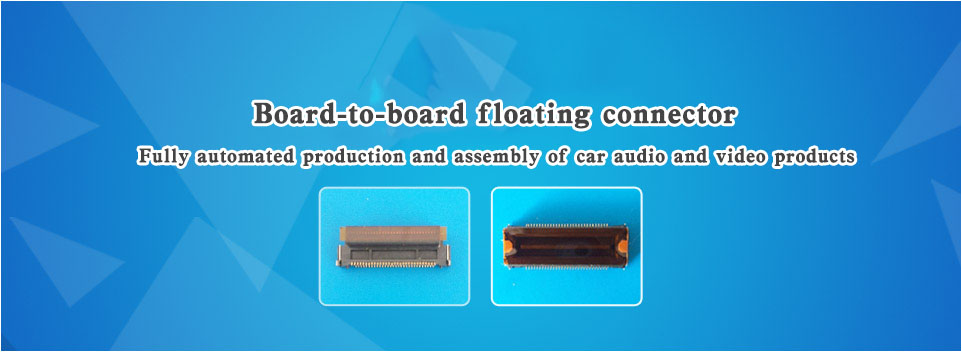
The small pin pitch board-to-board connector is the focus of Songlin's research and development. The company's new board-to-board connectors are currently in mass production with a pin pitch of 0.4mm. Song Lin believes that the HDMI connector is the next important development direction, so it will launch more new HDMI connectors in 2007.
Ye Sheng Technology recently developed a connector that combines a mobile phone SD card with a SIM card to achieve the purpose of saving mobile phone data storage space. Mobile phone connectors will be the focus of the company's R & D this year and next, and all products are RoHS compliant. Raised SD card connectors include push-in and eject types, as well as lower cost standard manual SD card connectors.
Rigorous testing and quality control measures
Manufacturers in Taiwan are mainly oriented to the mid-to-high-end market and adopt strict quality measures. They usually invest heavily in state-of-the-art test equipment, including those used to comply with the RoHS directive. Taiwanese manufacturers also cooperate with major research institutions and strive for international quality certification.
The upgraded HDMI connector has been approved by the HDMI Authorized Testing Center (ATC). In addition to its own RoHS testing equipment, Xunsheng also maintains its own R & D and testing laboratories equipped with microwave equipment, anechoic chambers and various state-of-the-art equipment for checking the electrical, mechanical and environmental performance of its products. Some of the laboratories that have been promoted have obtained accredited laboratory certificates issued by the CNLA (Chinese National Laboratory Accreditation) laboratory accreditation system. The company invests a certain amount of money each year to upgrade or replace test equipment.
Yuanling Industry also emphasized that all its product development activities are committed to improving the quality of connectors. To maintain high production standards, the company only uses manufacturing equipment made in Japan, Germany, and Switzerland. The company has more than 400 CNC, CAM and secondary processing equipment at its 13,750-square-meter Kunshan plant in mainland China. Its Taipei factory is also equipped with at least 250 automatic equipment.
Xinyu is committed to continue to improve the transmission speed and efficiency of its connectors. To this end, it has invested about $ 6 million in equipment purchases from Taiwan, Japan and the United States. The company also has its own environmental testing equipment, and 10% of its annual sales goes to production and testing equipment.
Consumer electronics, mobile applications drive output growth
The connector industry organization Bishop & Associates estimates that the global connector industry will reach $ 41.6 billion in 2007, up from $ 33.4 billion in 2004. Due to the growing demand of consumer electronics, telecommunications, PC and peripherals, and the automotive industry, more connector manufacturers plan to increase production in the next six months, and the connector industry in mainland China is expected to grow further.
In response to market demand, Songlin has significantly increased the output of HDMI connectors since early 2007. At present, its monthly output of HDMI connectors is about 500,000 to 800,000. It is expected that the company's sales growth rate will exceed 40% this year. It predicts that its HDMI connector output will double by the end of this year. The company said that once the target output is reached, the price of its HDMI connector may drop by an average of 10% in 2007.
Yuqiu predicts that its output growth in 2007 will reach more than 20%. Last year's increase in production also boosted sales by about 25% to $ 18.75 million. Yuqiu's capacity utilization rate is higher than 80%, and its production line of more than 50% of its connectors has more than 7 million monthly connectors. In the coming year, the company will produce more A / V connectors, USB connectors and mobile phone connectors.
Senda plans to increase production by about 15% by the end of 2007. The company said that as demand from handheld devices continues to expand, Senda expects its mini USB output to rise significantly. A / V connector output will remain high, these are Senda's main products. The company can produce 2 million multimedia connectors per month. Capacity utilization is currently 80%.
This issue interviewed a number of connector manufacturers whose capacity utilization rates were 65 to 100%. In addition to high capacity utilization, 92% of manufacturers will increase output by about 50% to meet expected large orders. The other 8% have no plans to increase production.
It is worth noting that the recent rise in copper prices has caused connector prices to rise. According to industry insiders, the price of copper rose from $ 1.80 per pound to about $ 3.60 in 2006. Rising copper prices have prompted some connector manufacturers to switch to alloy alternatives to reduce the copper used in connectors. When talking about market price trends, interviewed manufacturers have different views. 40% of the surveyed vendors expect market prices to rise, and 44% expect prices to remain the same. On the other hand, 16% of manufacturers predict that prices will fall.